


What to Look for in an HVAC Folding Machine Manufacturer
Choosing the right partner for duct forming equipment shapes how fast and how well a fabrication shop can turn sheet metal into finished ductwork. An experienced hvac folding machine manufacturer understands that the blade, the frame, and the control system all have to work together, not just exist side by side. This article walks through the real mechanical and operational factors that separate a dependable folding machine from one that causes headaches on the shop floor.
Why Duct Folding Still Causes Production Bottlenecks
Rectangular duct fabrication involves a repetitive but unforgiving task: folding galvanized sheet at precise angles without distorting the metal or damaging pre-formed flanges. Many shops still rely on older folding equipment that wasn’t built with TDF or drive cleat joints in mind.
The result is a familiar problem. Flanges get crushed or scraped during the fold, operators slow down to compensate, and scrap rates creep upward. This isn’t a labor skill issue so much as a tooling design issue. When the blade geometry doesn’t account for the flange profile already formed into the sheet, something has to give, and it’s usually the joint quality.
How Blade Geometry Protects Pre-Formed Flanges
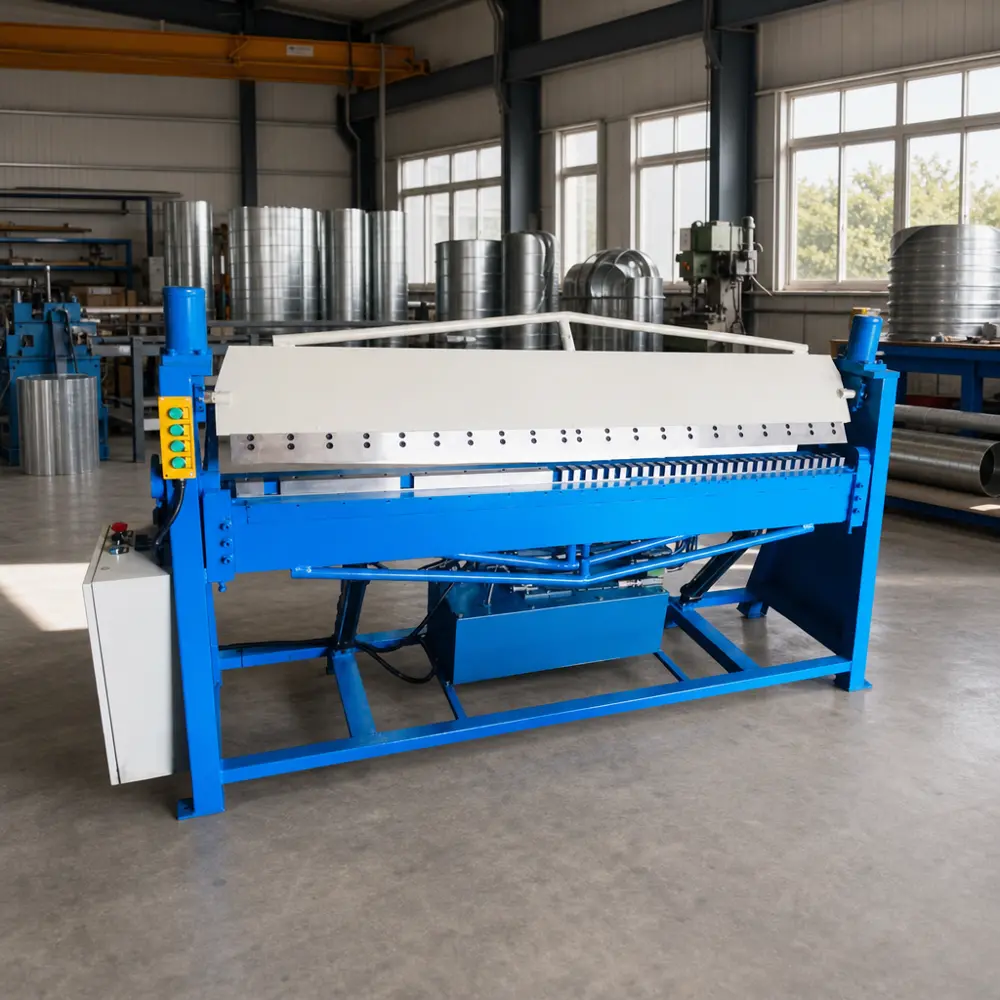
A folding blade that ignores flange clearance will catch on TDF or drive cleat edges every time. This is where blade design actually matters more than raw tonnage or motor size. The Duct Hydraulic Folding Machine addresses this directly with a folding blade shaped to position around sheets that already carry TDF or drive cleat flanges, letting the fold complete without the blade contacting or marring the joint.
That distinction sounds small until you’ve watched a batch of ductwork come off a machine with scratched flange edges that then fail a visual QC check. Clean flanges aren’t cosmetic. They affect how well the duct seals once assembled on site, and rework on finished ductwork is far more expensive than getting the fold right the first time.
Why Fold Angle Consistency Matters More Than It Seems
Rectangular ducts depend on consistent 90-degree corners. A few degrees of drift per fold doesn’t sound like much, but across four corners of a duct section, it compounds into visible gaps, misaligned seams, and connectors that don’t seat properly during installation.
Manual angle judgment, even from experienced operators, varies fold to fold simply because muscle memory isn’t a measurement tool. This is why angle sensing has become a practical necessity rather than a luxury feature on modern folding equipment. The machine uses an adjustable electrical angle sensor to hold fold geometry consistent across runs, which matters most when a shop is producing dozens of identical duct sections for the same job and needs every piece to assemble the same way.
Frame Construction and Why It Affects Long-Term Accuracy
Hydraulic folding generates real mechanical stress, and that stress has to go somewhere. If the machine frame flexes under load, fold accuracy degrades over time even if the blade and sensor are well designed. This is less about the first week of operation and more about year three, when a poorly built frame starts showing fatigue.
The frame on this machine is a fully welded steel structure that goes through heat treatment and high-frequency vibration treatment before assembly. Both processes relieve internal stress left over from welding, which reduces the risk of warping or micro-cracking once the machine is under repeated hydraulic load. It’s a manufacturing step that doesn’t show up in a spec sheet comparison but shows up clearly in how a machine holds tolerance after a few years of daily use.
Touch Screen Controls and the Real Labor Cost of Duct Fabrication
Labor cost in sheet metal shops isn’t just about hourly wages. It’s about how many operators are tied up doing repetitive, low-skill folding work instead of being deployed on fabrication tasks that require more judgment. A touch screen control panel reduces training time for new operators and cuts down on setup errors between jobs, since fold parameters can be dialed in rather than eyeballed.
Paired with hydraulic power delivery instead of manual or pneumatic actuation, the machine is built to speed up output while reducing the number of hands needed per shift. For shops running tight margins on commercial ventilation contracts, that labor reduction often matters more than any single spec on the machine.
Comparing the Available Working Lengths
Duct fabrication shops don’t all cut the same size sheet, so working length matters when matching a machine to actual production needs. Below is a comparison of the three available configurations.
| Model | Working Length | Max Material Thickness | Machine Weight | Machine Dimensions |
|---|---|---|---|---|
| YC-1.5X1250TDF | 1250 mm | 1.5 mm | 900 kg | 1.5 x 1.0 x 1.45 m |
| YC-1.5X1500TDF | 1500 mm | 1.5 mm | 1200 kg | 1.8 x 1.0 x 1.45 m |
| YC-1.5X2000TDF | 2000 mm | 1.5 mm | 1500 kg | 2.2 x 1.0 x 1.45 m |
All three models share the same 1.5 mm maximum thickness rating for galvanized iron sheet and the same hydraulic drive system, so the decision mostly comes down to the largest sheet width a shop regularly processes. A shop fabricating smaller residential duct runs rarely needs the 2000 mm bed, while a contractor focused on large commercial ventilation systems will find the shorter beds limiting.
How to Decide Which Model Fits Your Shop
Picking between the three models is less about budget and more about matching bed length to the duct sizes actually run through the shop. A practical way to approach the decision:
- Measure the widest sheet dimension used across your typical duct jobs, not just the average, since the folding bed needs to accommodate your largest recurring order.
- Account for floor space. The 2000 mm model’s larger footprint needs almost a meter more length than the 1250 mm version, which matters in tighter fabrication bays.
- Factor in future contract scope. If commercial projects with larger duct runs are a growing part of the business, sizing up now avoids a second equipment purchase later.
- Confirm the sheet thickness range used in your fabrication work falls within the 1.5 mm maximum, since this spec is shared across all three models and isn’t a differentiator.
Where This Equipment Fits Into a Duct Shop
The machine is built around a specific set of use cases rather than general-purpose metal bending. Its practical fit includes:
- Fabricating rectangular HVAC air ducts for commercial and industrial ventilation lines, where consistent right-angle folds drive assembly speed.
- Processing galvanized sheet that already carries pre-formed TDF flanges, which is common in modern duct fabrication workflows.
- Folding drive cleat joint flanges without damaging the formed edge, a recurring pain point with older folding equipment.
- Supporting mid-to-high volume duct fabrication workshops that need to reduce manual folding labor without moving to a fully automated line.
Common Questions About Duct Folding Equipment
Does flange-friendly blade design limit the machine to only TDF or drive cleat flanges?
The blade is specifically engineered for sheets with TDF or drive cleat flanges already formed, so shops running standard flat-sheet folding without these joint types may not see the same clearance benefit, though the hydraulic folding function itself still applies.
Is a touch screen control necessarily more reliable than manual dial controls?
Reliability depends on build quality rather than interface type alone, but a touch screen does reduce operator-dependent variation in fold setup, which is where most of the consistency gain comes from.
Can thicker sheet metal be processed on these models?
These three configurations are rated for a maximum material thickness of 1.5 mm on galvanized iron sheet; thicker material would require a different machine class rated for heavier gauge metal.
Does a larger working length mean faster production?
Not inherently. Working length determines the maximum sheet width per fold, not cycle speed. A shop running narrow ducts gains nothing from a 2000 mm bed beyond unused capacity and a larger footprint.
Matching Equipment to the Realities of HVAC Fabrication
Folding equipment decisions tend to get reduced to tonnage and price, but the details that actually affect daily output are blade geometry, frame durability, and control consistency. A shop that fabricates flanged ductwork daily will feel the difference between a blade that respects flange clearance and one that doesn’t, far more than it feels a difference in headline specs.
For shops evaluating a hvac folding machine manufacturer for duct fabrication lines, the practical questions are straightforward: does the blade protect your flange type, does the frame hold tolerance over years of hydraulic cycling, and does the control interface actually reduce setup time rather than just looking modern. We work from this same set of priorities, building equipment like the Duct Hydraulic Folding Machine around the real mechanical demands of HVAC duct forming rather than generic sheet bending specs.
-
What to Look for in an HVAC Folding Machine Manufacturer
2026/10/11 -
Steel Strip Cutting Machine: Engineering Precision in Modern Metal Processing
2026/10/10 -
How Duct Zipper Machines Streamline Rectangular Channel Assembly
2026/10/09 -
Roll Forming Machines: How Sheet Metal Becomes Structural Shapes
2026/10/08
-
Sheet Metal Press Brake: Ultimate Guide to Precision Bending Technology in 2024
2026/03/13 -
Metal Punching Machine: Ultimate Guide to Precision Manufacturing in 2024
2026/03/11 -
Metal Folding Machine: Comprehensive Guide to Precision Bending in 2024
2026/03/09 -
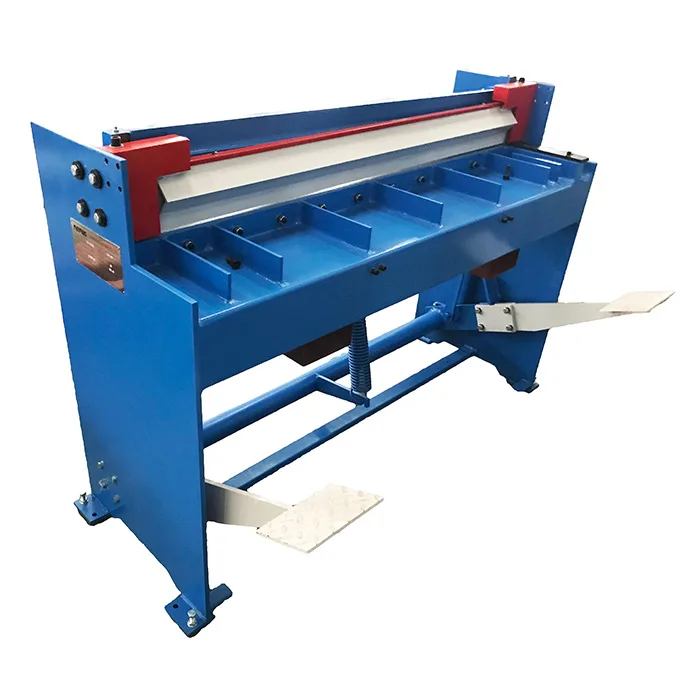
Sheet Metal Equipment: Ultimate Guide to Industrial Fabrication Solutions in 2026
2026/03/06
-
Latest Technological Advancements in Rectangular Duct Machines
2024/05/11 -
Integrating Automation with Rectangular Duct Machines for Enhanced Productivity
2024/05/11 -
Metal Shear Machines- Essential Tools for Precision Metal Cutting
2024/05/11 -
Understanding the Role and Function of Steel Strip Slitting Machines
2024/05/11
-
A Guide to the Latest Innovations in Sheet Metal Folding Machines
2024/11/29 -
Key Features to Consider When Investing in a Sheet Metal Folding Machine
2024/11/28 -
Enhancing Precision with Advanced Sheet Metal Folding Machines
2024/11/27 -
How to Choose the Right Sheet Metal Folding Machine for Your Workshop
2024/11/26
