


Roll Forming Machines: How Sheet Metal Becomes Structural Shapes
Manufacturers who cut, weld, or hand-bend metal sheet into structural profiles eventually hit a wall. The parts warp, the tolerances drift, and labor costs climb with every batch. Roll forming machines exist to solve exactly that bottleneck, converting flat coil or sheet into consistent cross-sectional shapes through a continuous series of rollers rather than a single stamping stroke.
The appeal isn’t just speed. It’s repeatability. Once a die set is dialed in, the hundredth part looks like the first one. That matters more in HVAC ductwork, roofing, and automotive trim than most buyers realize until they’ve dealt with a batch of inconsistent stamped pieces.
What Roll Forming Actually Does to Metal
Roll forming works by passing a metal strip through paired rollers arranged in sequence. Each station bends the material a few more degrees than the last, gradually shaping it into the final profile without a single dramatic strike.
This gradual approach is the entire point. Stamping or press braking applies force in one or two hits, which stresses the metal unevenly and often leaves spring-back or surface marks. Roll forming spreads that stress across many small, controlled deformations.
The tradeoff is setup complexity. A roll forming line needs properly sequenced dies, and changing profiles usually means changing tooling. That’s fine for high-volume runs of a fixed shape, but it’s a poor fit for one-off custom parts.
Common Applications Across Industries
Roll forming machines show up wherever long, uniform metal profiles are needed in quantity. Some of the more established use cases include:
- HVAC ductwork — round, oval, and rectangular ducts formed from galvanized steel, stainless steel, or aluminum sheet
- Roofing and cladding — corrugated panels, standing seam roofing, and metal siding
- Automotive structural parts — door frames, roof rails, and reinforcement channels
- Storage and racking systems — shelving uprights and cross beams formed for load-bearing strength
- Furniture and appliance housings — cabinet frames and structural supports
Each of these applications shares a common thread: the part needs to be straight, dimensionally consistent, and produced in volumes where hand fabrication no longer makes economic sense.
Where Round Duct Forming Fits Into the Process
Rectangular and oval ducts usually rely on a different kind of forming altogether. Before Pittsburgh lock forming or seam closing can happen, flat galvanized sheet has to become a cylinder first, and that’s a distinct mechanical step from the flat-panel roll forming described above.
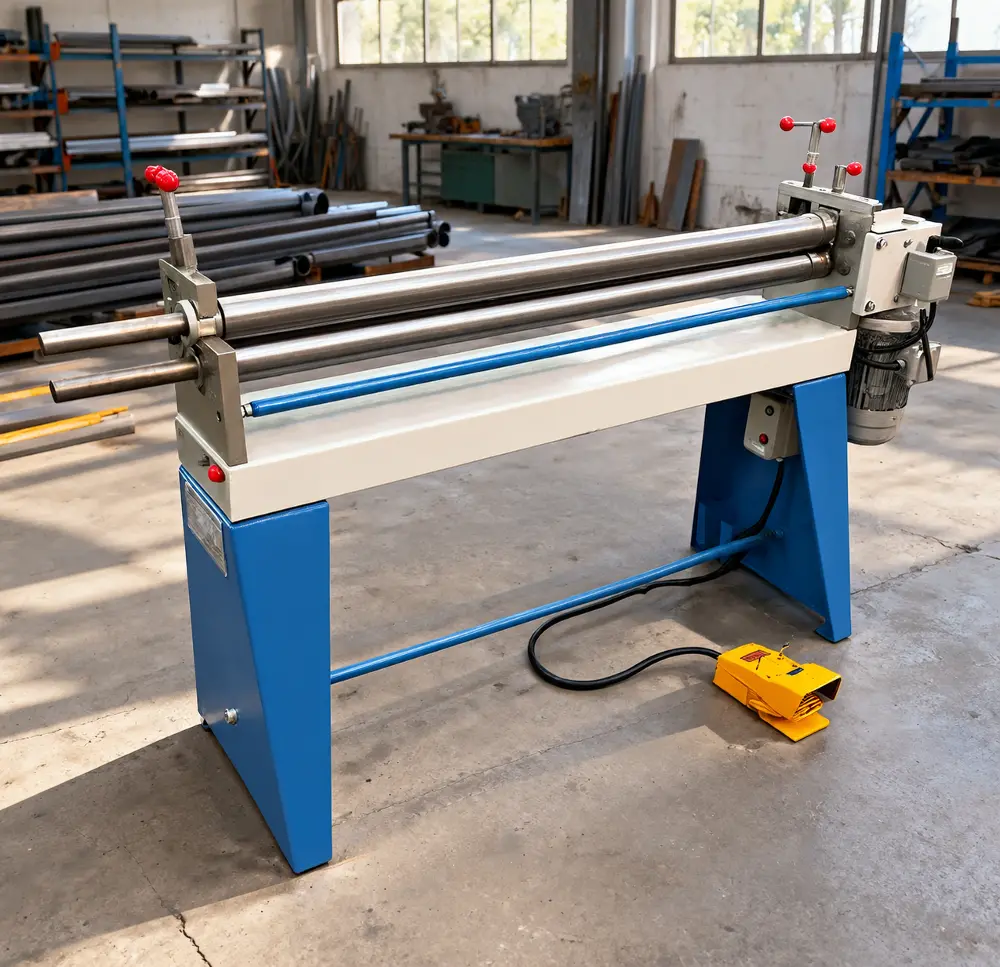
This is where a roll bending machine, sometimes grouped loosely under the roll forming category by shop floor staff, earns its place on the line. It curls sheet metal into circular, round, or oval sections rather than pressing it into a fixed linear profile.
Metmac’s electrical roll bending machine, built around models like the W11G-2X1000 and W11G-1.5X1530, handles galvanized iron, stainless steel, and aluminum sheet up to 2.0 mm thick. It’s positioned as a pre-rolling stage feeding into Pittsburgh lock former and seam closing equipment further down the duct production line.
The rollers themselves are made from alloy die steel, chosen for wear resistance and a smooth finish on the rolled surface, according to the manufacturer’s specifications. Needle roller bearings support the rolling load during continuous operation, which matters on shifts where the machine runs for hours without a break.
Reading the Spec Sheet: What Actually Matters
Buyers new to this equipment often get lost comparing motor wattage or overall machine weight, when the numbers that actually predict shop-floor performance are narrower. Sheet thickness capacity, bending length, and minimum roll diameter tell you almost everything about whether a machine fits your product line.
| Model | Max Sheet Thickness | Max Bending Length | Min Bending Diameter | Motor Power |
|---|---|---|---|---|
| W11G-2X1000 | 2.0 mm | 1000 mm | 80 mm | 1.5 kW |
| W11G-1.5X1300 | 1.5 mm | 1300 mm | 80 mm | 1.5 kW |
| W11G-1.5X1530 | 1.5 mm | 1530 mm | 80 mm | 1.5 kW |
Notice the tradeoff between the first model and the other two. The W11G-2X1000 handles thicker sheet but at a shorter working length, while the 1.5X1300 and 1.5X1530 trade thickness capacity for longer duct sections. Neither is objectively better, they’re suited to different product mixes.
If your typical order calls for longer duct runs in thinner stainless sheet, the extra length outweighs the thickness ceiling. If you’re mostly forming shorter, heavier-gauge galvanized sections, the 2X1000 makes more sense despite its shorter bed.
Choosing Between Manual, Semi-Automatic, and Powered Rolling
Not every shop needs a motorized unit. Deciding which level of automation to buy usually comes down to volume and labor cost, worked through in roughly this order:
- Estimate daily or weekly duct volume. Low volume, occasional runs rarely justify a powered machine’s added cost.
- Check sheet gauge range. Anything above roughly 1.2 mm becomes physically demanding to roll by hand consistently.
- Factor in operator turnover. Powered units with simple foot pedal controls reduce the training time needed for new staff.
- Consider floor space and duct length. Longer bending beds need proportionally more clearance around the machine.
- Review directional control needs. Reversible feed and discharge rollers let one operator reposition sheet without walking around the machine, which speeds up alignment on longer runs.
Metmac’s roll bending unit uses a two-way directional control system paired with a dual-pedal foot switch, letting a single operator manage forward and reverse rolling hands-free. That detail sounds minor until you’ve watched someone try to hold a sheet steady while reaching for a hand switch.
Maintenance Realities Shop Owners Should Expect
Rollers wear. That’s not a flaw, it’s physics, since every pass applies friction and pressure to the same contact surface. What separates a durable machine from a short-lived one is how the wear-prone components are engineered.
Alloy die steel rollers resist surface wear longer than mild steel equivalents, which keeps the rolled surface finish smoother across thousands of cycles. The gearing that drives the rollers matters just as much. Wear-resistant transmission gears reduce the backlash that eventually shows up as inconsistent bend diameters.
A detail worth checking before purchase: how the machine releases finished parts. Metmac’s design includes a manual lock and unlock mechanism on the top roller specifically for quick removal of rolled cylinders, which avoids the awkward extraction process that plagues machines lacking this feature.
Frequently Asked Questions
Is a roll bending machine the same thing as a roll forming machine?
Not exactly. Roll forming typically refers to shaping flat profiles through sequential linear rollers, while roll bending curls sheet into circular or oval cross-sections. Both fall under the broader family of roll forming machines in industry conversation, but they solve different geometric problems.
Can this equipment handle stainless steel without damaging the finish?
Alloy die steel rollers are designed to maintain a smooth contact surface, which reduces the risk of scoring or marking stainless sheet during bending, based on the manufacturer’s design specifications. Actual finish quality still depends on proper roller gap adjustment and sheet cleanliness.
What’s the minimum duct diameter these machines can produce?
The listed minimum roll bending diameter across Metmac’s W11G series is 80 mm, which covers most standard round HVAC duct sizes used in residential and light commercial installations.
Do I need a separate machine for oval ducts versus round ducts?
No. The same roll bending unit forms round, oval, and cylindrical shapes; the difference comes down to roller gap settings and how the operator feeds and guides the sheet during the pass.
Matching the Machine to the Product Line
The right choice among roll forming machines, and the roll bending equipment that often works alongside them, comes down to matching sheet thickness, bending length, and production volume against what a specific line actually needs. Buyers who skip this matching step tend to either overpay for capacity they’ll never use or undersize a machine that then bottlenecks the whole duct production process.
For shops building circular and oval HVAC ducts specifically, the pre-rolling stage deserves as much attention as the lock forming or seam closing equipment downstream. A roller that can’t hold consistent diameter tolerance passes that problem straight to the next machine in line, where it’s harder and more expensive to fix.
Whether the goal is linear structural profiles or curled duct sections, roll forming machines remain one of the more dependable ways to turn flat sheet into a part that holds its shape under real-world use.
-
Roll Forming Machines: How Sheet Metal Becomes Structural Shapes
2026/10/08 -
Duct Making Machines for High-Output Rectangular Duct Fabrication
2026/10/08 -
Sheet Metal Machine Selection for Precise Bending and Folding
2026/10/08 -
Metalworking Equipment: Choosing the Right Machinery for Modern Fabrication
2026/10/08
-
Sheet Metal Press Brake: Ultimate Guide to Precision Bending Technology in 2024
2026/03/13 -
Metal Punching Machine: Ultimate Guide to Precision Manufacturing in 2024
2026/03/11 -
Metal Folding Machine: Comprehensive Guide to Precision Bending in 2024
2026/03/09 -
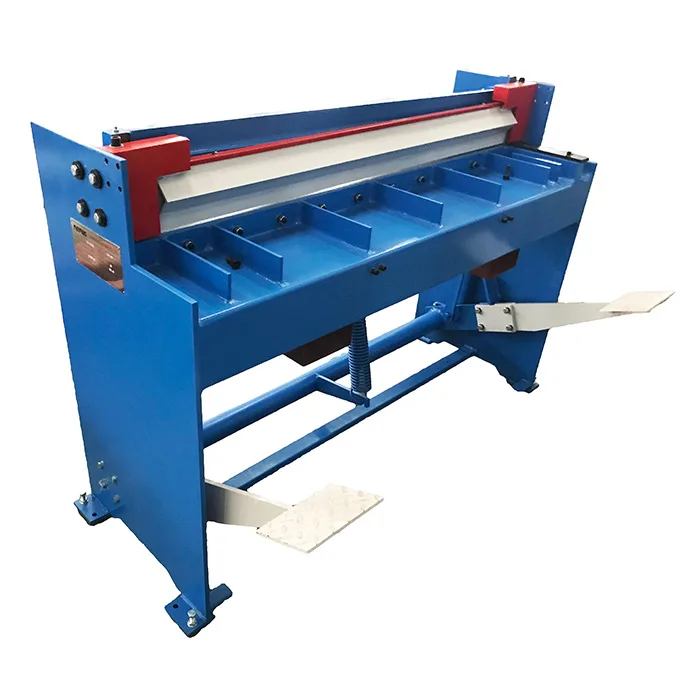
Sheet Metal Equipment: Ultimate Guide to Industrial Fabrication Solutions in 2026
2026/03/06
-
Understanding the Role and Function of Steel Strip Slitting Machines
2024/05/11 -
Maintenance Tips for Longevity of HVAC Duct Machines
2024/05/11 -
Innovations in Steel Strip Slitting Machine Design and Technology
2024/05/11 -
Improving Accuracy in Metal Fabrication with Laser Metal Shear Machines
2024/05/11
-
A Guide to the Latest Innovations in Sheet Metal Folding Machines
2024/11/29 -
Key Features to Consider When Investing in a Sheet Metal Folding Machine
2024/11/28 -
Enhancing Precision with Advanced Sheet Metal Folding Machines
2024/11/27 -
How to Choose the Right Sheet Metal Folding Machine for Your Workshop
2024/11/26
