


Duct Making Machines for High-Output Rectangular Duct Fabrication
Choosing duct making machines is rarely just an equipment purchase. It is a decision about how many ducts a workshop can turn out in a shift, and whether that output can keep pace with contracts that used to feel comfortable. As commercial and industrial HVAC projects grow larger, the gap between manual fabrication and automated duct making machines becomes the difference between meeting a deadline and explaining a delay to a client.
Rectangular duct production has always involved the same basic steps: uncoiling, leveling, forming, cutting, and flanging. What has changed is how many of those steps a single machine, or even a single operator, can manage at once.
Why HVAC Workshops Outgrow Manual Duct Lines
A workshop running manual shears and standalone folders can produce quality ducts, but rarely at volume. Each transfer between machines adds handling time, and every handoff introduces a chance for measurement drift. Small shops absorb this cost. Larger contracts do not forgive it.
As order sizes grow, the math shifts. Labor cost per duct section stays roughly flat on manual lines, while automated duct making machines spread setup and programming time across hundreds of identical pieces. The workshop that scales fastest is usually the one that removed the most manual handoffs, not the one with the newest single machine.
Where Manual and Semi-Automated Bottlenecks Start
Bottlenecks rarely appear where people expect them. Cutting is often fast enough. Coil handling is where hours disappear. Loading a heavy galvanized steel coil by crane, aligning it by eye, and feeding it manually into a leveler takes far longer than the forming steps that follow.
Beading and grooving add another layer of friction when they require separate passes on separate equipment. Every extra pass means another chance for a sheet to shift out of square, which shows up later as a duct section that will not seal cleanly against its flange.
Coil Handling and Sheet Preparation Before the First Cut
Automated lines address this by pulling coil handling into the same sequence as forming. The Duct Auto Production Line AML-IV, for example, uses motor-driven synchronized uncoilers built to handle galvanized steel coils weighing up to 7,000 kg, feeding directly into a coated pinch roller and nine-roller leveling unit.
That capacity matters for two practical reasons:
- Fewer coil changes per shift, since each load carries more material through the line.
- Flatter sheet entering the forming stations, which reduces the chance of skewed cuts downstream.
Working width on this line is rated at 1,250 mm, with thickness handling from 0.5 to 1.2 mm, which covers most galvanized stock used in standard rectangular duct fabrication.
Beading, Grooving, and Why Sheet Flatness Carries Forward
Beading depth is not a cosmetic detail. It affects panel stiffness across the flat faces of a duct, which in turn affects how much a section deflects under its own weight once installed. Adjustable hand-wheel beading, built into the leveling stage rather than as a separate operation, lets an operator tune groove depth to the gauge of steel actually running through the line.
This is one of those steps that looks minor on a spec sheet but shows up immediately on an installed duct run. A section beaded too shallow can oscillate slightly in airflow; one beaded too aggressively can crack at the fold line during bending.
Flange and Lock Forming Without Retooling Between Jobs
Duct fabrication rarely means one flange style all year. A workshop might run Pittsburgh lock seams for one contract and TDF flange connections for the next, sometimes within the same week.
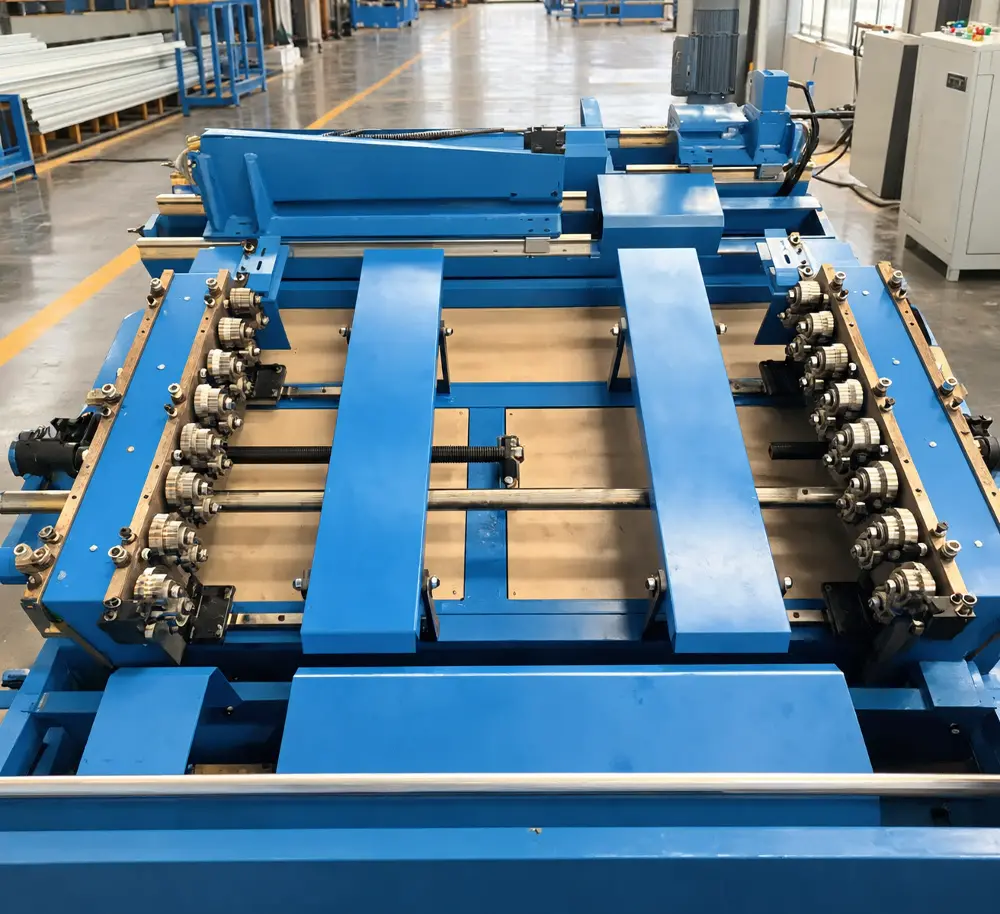
The AML-IV’s modular tooling supports Pittsburgh lock, TDF flange, drive cleat, and angle iron flange configurations, along with L-duct, U-duct, and full square duct bending, according to the equipment specification. Switching between these formats through recipe programming on the touch screen, rather than physically swapping tooling stations, keeps changeover time short between order types.
For a shop juggling mixed order books, that flexibility often matters more than raw cutting speed. A machine that forms every flange type but requires half a day of retooling between jobs will still fall behind one that switches formats in minutes.
Cutting and Bending Accuracy in Practice
Tolerance numbers on a spec sheet only matter once they are translated into assembled ductwork. A cutting tolerance of ±0.5 mm/m sounds small until multiplied across a run of forty-foot duct sections feeding into a shared header. Small drifts compound.
The AML-IV pairs wear-resistant shear blades with hydraulic benders rated for ±0.5 mm/m cutting tolerance and ±0.5° bending accuracy, per the manufacturer’s specification. Consistency at this level reduces the rework that typically shows up at the flange-mating stage, where two sections either seal correctly or need a shim.
Technical Specifications at a Glance
| Parameter | Specification |
|---|---|
| Working thickness | 0.5–1.2 mm |
| Working width | 1,250 mm |
| Cut-to-length range | 600–4,000 mm |
| Max coil loading weight | 7,000 kg |
| Flat sheet speed | Up to 10 m/min |
| L-duct piece forming speed | ≥30 sec/piece |
| Square duct forming speed | ≥60 sec/piece |
| Cutting length tolerance | ±0.5 mm/m |
| Bending accuracy | ±0.5° |
| Power supply | 25 kW |
Numbers like these are most useful side by side with a workshop’s current output. A shop forming square ducts at a manual rate of several minutes per piece will notice the shift to a sixty-second cycle almost immediately in its weekly totals.
Matching Production Speed to Workshop Volume
Not every workshop needs the same throughput, and buying more capacity than a contract pipeline supports just ties up floor space. The right question is not "how fast can this machine run" but "how many square duct sections does this contract actually require per week."
A useful way to size that decision:
- Estimate weekly duct output in linear meters across current and near-term contracts.
- Compare that figure against the line’s rated forming speed for L-duct and square duct pieces.
- Factor in coil changeover frequency, since a 7,000 kg capacity reduces reload interruptions on long runs.
- Confirm flange and lock formats needed match the tooling configuration available.
Skipping this sizing step is how workshops end up either under capacity during peak season or paying for automation they rarely fully use.
Common Questions About Automated Duct Production Lines
Does a higher coil loading weight always mean faster overall output?
Not directly. Coil capacity reduces how often an operator stops to reload, which helps on long runs, but overall speed still depends on forming cycle time and how often the job requires flange or lock changes.
Can one line really switch between Pittsburgh lock and TDF flange without new tooling?
On lines built with modular flange stations, such as the AML-IV, switching is handled through the control system and tooling configuration rather than a full retooling process, though setup time still varies by job complexity.
Is a single operator realistic for a line handling coils this heavy?
The uncoiling and feeding stages are motor-driven and synchronized specifically so one operator can manage loading, positioning, and touch screen programming without a second person on the coil end.
What happens if the incoming coil is thinner or thicker than the line’s rated range?
Material outside the 0.5–1.2 mm working range is outside the machine’s designed tolerance band, and running it can affect both leveling quality and cutting accuracy.
Planning a Duct Making Machine Purchase Around Real Output Needs
Selecting duct making machines works best when it starts from the fabrication problem, not the spec sheet. A workshop drowning in coil handling time needs different priorities than one struggling with flange changeover between contracts, even though both might land on the same line.
Lines like the Duct Auto Production Line AML-IV, built for us at Metmac, are designed around that full sequence, from coil to formed flange, rather than any single station in isolation. For a workshop scaling past what manual fabrication can sustain, that end-to-end view of duct making machines tends to matter more than any one number on a spec sheet.
-
Duct Making Machines for High-Output Rectangular Duct Fabrication
2026/10/08 -
Sheet Metal Machine Selection for Precise Bending and Folding
2026/10/08 -
Metalworking Equipment: Choosing the Right Machinery for Modern Fabrication
2026/10/08 -
Choosing Metalworking Machinery for Precision Sheet Bending Operations
2026/10/08
-
Sheet Metal Press Brake: Ultimate Guide to Precision Bending Technology in 2024
2026/03/13 -
Metal Punching Machine: Ultimate Guide to Precision Manufacturing in 2024
2026/03/11 -
Metal Folding Machine: Comprehensive Guide to Precision Bending in 2024
2026/03/09 -
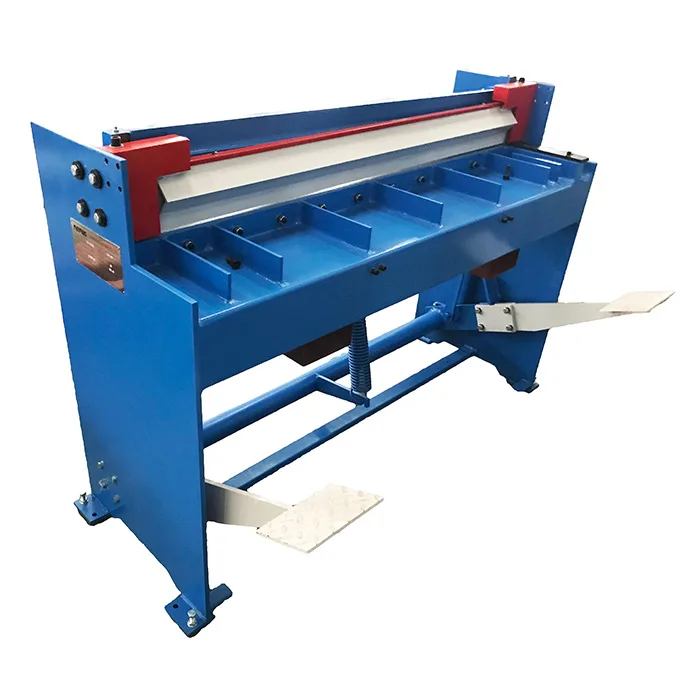
Sheet Metal Equipment: Ultimate Guide to Industrial Fabrication Solutions in 2026
2026/03/06
-
A Guide to the Latest Innovations in Sheet Metal Folding Machines
2024/11/29 -
Key Features to Consider When Investing in a Sheet Metal Folding Machine
2024/11/28 -
Enhancing Precision with Advanced Sheet Metal Folding Machines
2024/11/27 -
How to Choose the Right Sheet Metal Folding Machine for Your Workshop
2024/11/26
