

Choosing Metalworking Machinery for Precision Sheet Bending Operations
Metalworking machinery covers a wide range of equipment, but few categories carry as much weight in a fabrication shop as the bending machine. Anyone sourcing metalworking machinery for cabinet production, structural parts, or enclosure fabrication eventually runs into the same question: how do you match hydraulic bending capacity to the plate thickness and length you actually run. This article breaks down what a heavy duty hydraulic bending machine does, how its specs translate into shop-floor results, and where it fits among other metalworking machinery choices.
Why Bending Accuracy Is Harder Than It Looks
Bending a sheet sounds simple until the plate springs back a degree or two off target. Thicker stock resists the die more than thin gauge, and that resistance shows up as deflection in the frame if the structure isn’t stiff enough. A frame that flexes under load doesn’t just produce a bad bend once. It drifts over thousands of cycles, and tolerances that were fine in week one start failing quality checks by month three.
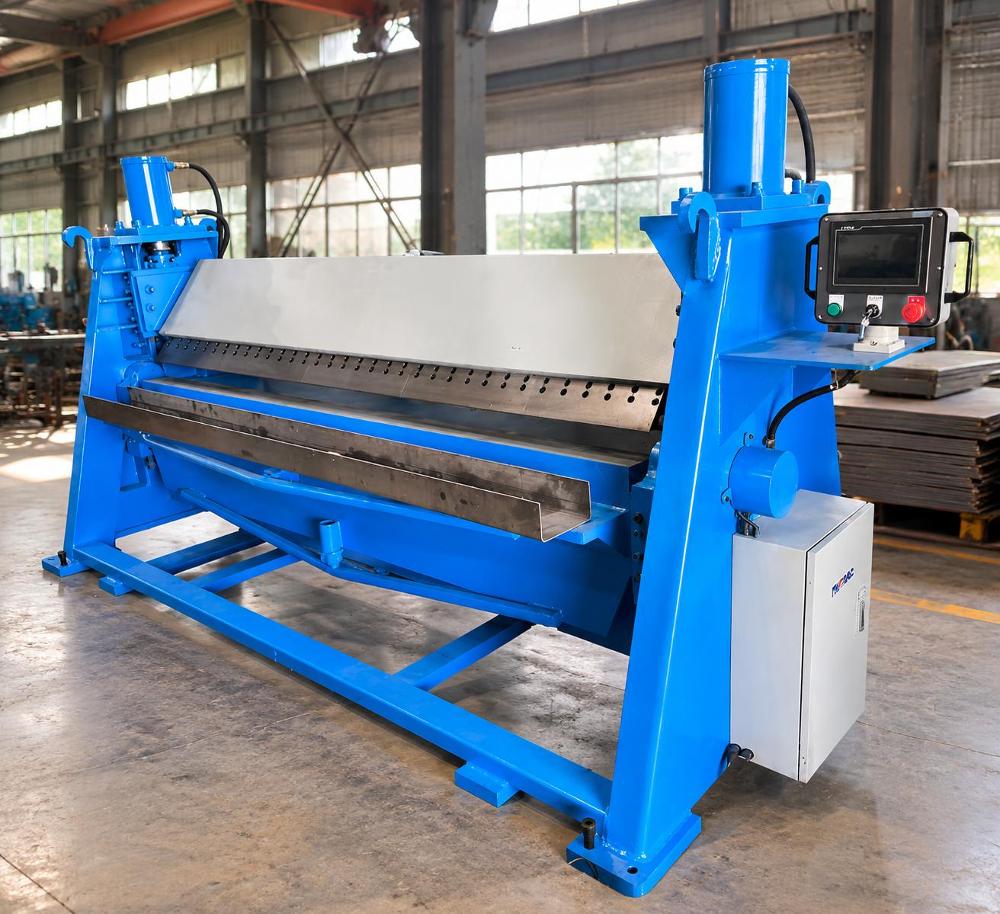
That’s the core reason a welded, stress-relieved frame matters more than it might seem on a spec sheet. Stress relief treatment removes residual tension left over from welding, so the steel doesn’t warp slowly as it’s put under repeated hydraulic load. The heavy-duty hydraulic bending machine from Metmac uses this construction specifically to keep the frame rigid across its full working life, rather than relying on mass alone to resist deformation.
Matching Hydraulic Force to Material Thickness
Hydraulic pressure is where the real differentiation between bending machines shows up. A system rated for thin gauge aluminum won’t hold up bending 6mm mild steel, and pushing it there either stalls the cycle or damages the cylinders over time. This is the point where buyers need to look past headline tonnage and check the actual pressure rating against their thickest material.
This machine runs a hydraulic system rated to 25 MPa maximum working pressure, fed by imported hydraulic components chosen for consistent output rather than peak numbers that only hold under ideal conditions. In practice, that pressure ceiling is what allows the folding thickness range to reach up to 6.0mm on mild steel, depending on the model, while stainless steel versions are rated to a lower 2.0–3.0mm range because stainless work-hardens faster and resists deformation more than mild steel at equivalent thickness.
| Material | Folding Thickness Range | Notes |
|---|---|---|
| Mild Steel | 0.2–6.0 mm | Range depends on model variant (0.2–4.0mm or 0.2–6.0mm) |
| Stainless Steel | 0.2–3.0 mm | Range depends on model variant (0.2–2.0mm or 0.2–3.0mm) |
| Aluminum | Compatible | Exact range varies with alloy and temper |
Sorting your production by material first, then checking that thickness range against the machine’s rating, avoids the common mistake of buying on tonnage alone and discovering the pressure margin is too thin for daily stainless steel runs.
CNC Control and the Three Operating Modes
Hydraulic force gets the bend started, but control determines whether it lands where you need it. A dedicated CNC system on this machine handles positioning with enough precision that operators aren’t manually compensating for springback on every part. That matters most in shops running mixed batch sizes, where switching setups quickly without re-learning a machine each time saves real labor hours.
The CNC also governs three distinct working modes, and picking the right one changes how a shift runs:
- Manual mode suits one-off parts, prototypes, or troubleshooting where an operator needs direct control over every stroke.
- Single mode runs one complete bend cycle per trigger, which fits short-run jobs with varying part geometry.
- Continuous mode keeps the beam cycling for repetitive long runs, cutting idle time between parts on high-volume orders.
Shops that jump between prototype work and volume orders benefit from having all three available on one machine instead of buying separate equipment for each production style.
Frame Size, Folding Length, and Shop Layout
Folding length is often the spec buyers underestimate until the machine is already on the floor. A 2000mm bed handles small enclosure panels fine, but structural components or long duct sections need the 4100mm, 5100mm, or 6000mm variants instead. Matching bed length to your longest regular part avoids the workaround of running oversized sheets through in awkward multiple passes.
Machine weight scales with that length too, ranging from roughly 5642 kg on the smallest 2000mm frame up to 8042 kg on the 6000mm version. That weight isn’t incidental. A heavier base resists vibration and walking under repeated hydraulic strokes, which ties back into the same rigidity concern that stress relief treatment addresses in the frame welds. Before ordering, it’s worth confirming floor loading capacity and crane access for machines in the 8-ton range, since installation logistics differ substantially from the lighter models.
Folding Angle Range and Practical Bending Limits
The bending beam on this machine swings through 0° to 123°, giving a working folding angle range of 20° to 120° once tooling and material spring-back are accounted for. That range covers the vast majority of enclosure and structural bends shops actually need, from shallow flanges to near-perpendicular folds used in cabinet corners.
Upper beam stroke frequency sits at 8 strokes per minute, which sets a practical ceiling on throughput regardless of material or angle. Shops running high-mix, high-volume sheet metal work should weigh this cycle rate against their target output before assuming a bigger frame automatically means faster production. Bed length and cycle speed solve different bottlenecks, and confusing the two is a common sourcing mistake.
Where This Machine Fits Among Metalworking Machinery Options
Bending machines don’t operate in isolation. They sit inside a broader chain of metalworking machinery that might include shearing, punching, or roll forming equipment feeding parts into the folding stage. For shops handling electrical cabinets, structural brackets, or machinery enclosures, a hydraulic bender with CNC control tends to be the stage where tolerance stacking either gets corrected or gets locked in.
Choosing between bending machine models comes down to answering a few questions honestly:
- What’s the thickest material in your regular production mix, and does the pressure rating clear it with margin to spare?
- What’s your longest common part length, and does the bed size match without forcing awkward workarounds?
- Are you running mostly short-batch variable work, long continuous runs, or a mix of both?
- Does your floor have the loading capacity and access for a machine in the 5,600–8,000 kg range?
Answering those before comparing spec sheets narrows the field faster than starting with tonnage numbers in isolation.
Frequently Asked Questions
Does a higher hydraulic pressure rating always mean better bending quality?
Not on its own. Pressure needs to match the material and thickness you’re actually running. Overpowered systems on thin material can be harder to control precisely, while underpowered systems on thick plate stall or wear components faster.
Can one machine handle both mild steel and stainless steel work?
Yes, within the rated thickness ranges for each material, since stainless steel typically has a lower maximum thickness rating than mild steel on the same machine due to its higher resistance to deformation.
Is stress relief treatment something buyers can verify, or is it just a claim?
Stress relief is a heat treatment process applied after welding, and reputable manufacturers can typically describe the process and timing used. It’s worth asking directly rather than assuming it’s included by default.
How much does folding length affect the price and footprint of the machine?
Significantly. Longer bed variants require proportionally more steel in the frame, which raises both weight and floor space needs, so it’s worth sizing to your actual longest part rather than buying extra length as a safety margin.
Sourcing the right bending equipment ultimately comes down to matching real production numbers, thickness, length, and cycle volume, against the machine’s rated specifications rather than chasing the biggest frame on the list. For fabrication shops evaluating metalworking machinery investments, that discipline in matching specs to actual workload is what determines whether a hydraulic bending machine pays for itself in consistent, low-rework output over the years it’s on the floor.
-
Choosing Metalworking Machinery for Precision Sheet Bending Operations
2026/10/08 -
Press Metal Machine: The Definitive Guide to Precision Metal Forming
2026/03/12 -
Metal Punching Machine: The Ultimate Guide to Precision Hole Punching
2026/03/10 -
Sheet Metal Machinery: The Ultimate Guide to Industrial Fabrication Excellence
2026/03/04
-
Sheet Metal Press Brake: Ultimate Guide to Precision Bending Technology in 2024
2026/03/13 -
Metal Punching Machine: Ultimate Guide to Precision Manufacturing in 2024
2026/03/11 -
Metal Folding Machine: Comprehensive Guide to Precision Bending in 2024
2026/03/09 -
Sheet Metal Equipment: Ultimate Guide to Industrial Fabrication Solutions in 2026
2026/03/06
-
A Guide to the Latest Innovations in Sheet Metal Folding Machines
2024/11/29 -
Key Features to Consider When Investing in a Sheet Metal Folding Machine
2024/11/28 -
Enhancing Precision with Advanced Sheet Metal Folding Machines
2024/11/27 -
How to Choose the Right Sheet Metal Folding Machine for Your Workshop
2024/11/26
