


Hydraulic vs. Mechanical- Understanding Different Plate Bending Mechanisms
In the realm of metalworking, plate bending is a crucial process for shaping and forming metal plates into desired curvatures. Achieving precise and efficient bends requires an understanding of the different bending mechanisms available, namely hydraulic and mechanical. This article delves into the nuances of both approaches, exploring their principles, advantages, and limitations.
Principles of Hydraulic Bending
Hydraulic bending relies on the use of hydraulic pressure to exert force on a punch that presses the metal plate against a die. The hydraulic system consists of a pump, a reservoir, and a hydraulic cylinder. The pump generates high-pressure fluid that is directed into the cylinder, which in turn forces the piston to move. The piston’s movement then applies pressure to the punch, causing it to bend the plate.
A key advantage of hydraulic bending is its ability to apply precise and evenly distributed force over the entire length of the bend. This results in consistent and accurate bends with minimal distortion or buckling. Additionally, hydraulic bending machines offer high speed and automation capabilities, making them suitable for high-volume production.
Principles of Mechanical Bending
Mechanical bending, on the other hand, employs a mechanical system to generate the force required for bending. There are two main types of mechanical bending machines: press brakes and roll benders.
Press Brakes
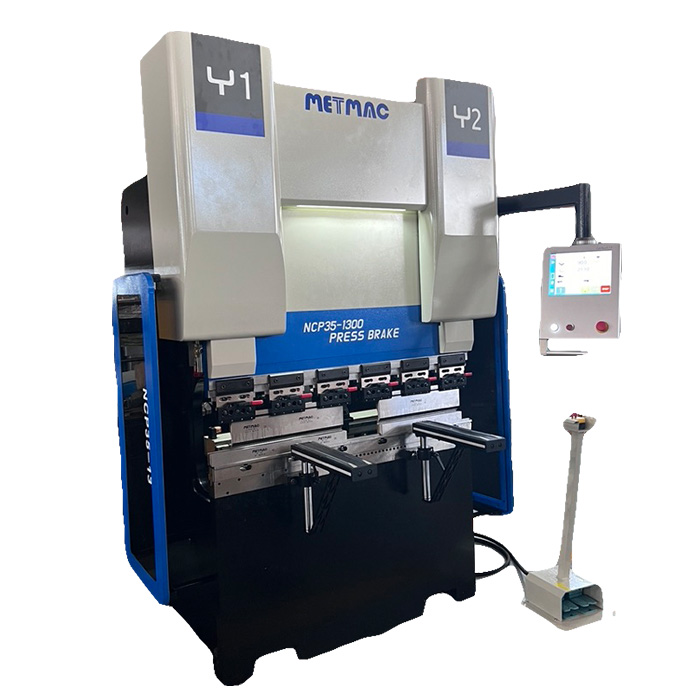
Press brakes consist of a fixed lower die and a moving upper die. The metal plate is placed between the dies, and the upper die descends, applying force to the plate and bending it over the lower die. Press brakes provide high tonnage capacity, allowing them to bend thick and high-strength materials. However, they are generally slower than hydraulic bending machines and require more setup time.
Roll Benders
Roll benders use a series of rotating rolls to gradually bend the metal plate as it passes through the machine. The rolls can be configured in different arrangements to achieve various bend profiles. Roll benders offer continuous bending and are suitable for long or complex bends. They are often used in the shipbuilding and construction industries.
Advantages and Limitations
Each bending mechanism has its own advantages and limitations:
Hydraulic Bending
Advantages:
Precise and consistent bends
High speed and automation
Suitable for thin and medium-thickness materials
Limitations:
Limited tonnage capacity
Sensitive to temperature fluctuations
Mechanical Bending
Advantages:
High tonnage capacity
Ability to bend thick and high-strength materials
Limitations:
Slower speed and setup time
Potential for distortion or buckling
Conclusion
The choice between hydraulic and mechanical bending mechanisms depends on the specific bending requirements, including material thickness, bend radius, production volume, and desired accuracy. Hydraulic bending excels in high-volume production of thin and medium-thickness materials, while mechanical bending is more suitable for bending thick and high-strength materials with higher tonnage requirements. Understanding the nuances of each mechanism empowers engineers and fabricators to make informed decisions and achieve optimal bending results.
-
Press Metal Machine: The Definitive Guide to Precision Metal Forming
2026/03/12 -
Metal Punching Machine: The Ultimate Guide to Precision Hole Punching
2026/03/10 -
Sheet Metal Machinery: The Ultimate Guide to Industrial Fabrication Excellence
2026/03/04 -
Iron Sheet Laser Cutting Machine: Unmatched Precision for Demanding Fabrication with METMAC
2026/01/06
-
Sheet Metal Press Brake: Ultimate Guide to Precision Bending Technology in 2024
2026/03/13 -
Metal Punching Machine: Ultimate Guide to Precision Manufacturing in 2024
2026/03/11 -
Metal Folding Machine: Comprehensive Guide to Precision Bending in 2024
2026/03/09 -
Sheet Metal Equipment: Ultimate Guide to Industrial Fabrication Solutions in 2026
2026/03/06
-
A Guide to the Latest Innovations in Sheet Metal Folding Machines
2024/11/29 -
Key Features to Consider When Investing in a Sheet Metal Folding Machine
2024/11/28 -
Enhancing Precision with Advanced Sheet Metal Folding Machines
2024/11/27 -
How to Choose the Right Sheet Metal Folding Machine for Your Workshop
2024/11/26
